

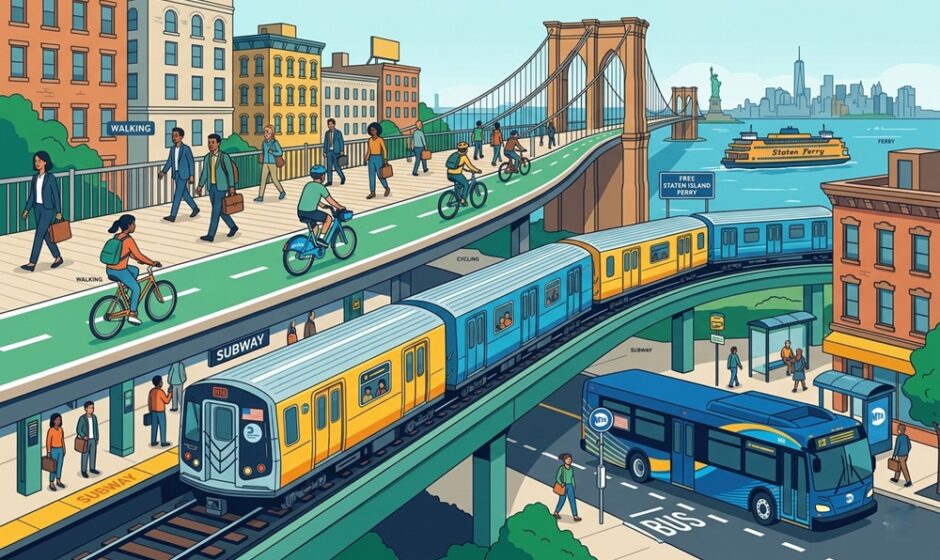

Commuting in New York City is one of the biggest line items in any budget. The average New Yorker spends $1,800–$3,200 per year just getting to work, and that’s before accounting for delays, service disruptions, and the occasional taxi taken in desperation. Here’s how to get that number down significantly without sacrificing your sanity.
The True Cost of NYC Commuting (By Method)
Before talking about savings, let’s establish baselines. These are 2026 costs for a standard work commute (5 days/week, 50 weeks/year):
| Method | Monthly Cost | Annual Cost | Notes |
|---|---|---|---|
| Single-ride subway | $150–180 | $1,800–2,160 | No unlimited plan |
| Unlimited MetroCard | $132 | $1,584 | 30-day pass |
| OMNY Pay-Per-Ride (capped) | $132 cap | $1,584 | Same as unlimited but flexible |
| Commuter rail (LIRR/Metro-North) | $200–400 | $2,400–4,800 | Distance-dependent |
| Car (ownership + parking + gas) | $800–1,500 | $9,600–18,000 | Manhattan parking alone: $400–600/mo |
| Cycling | $20–40/mo | $240–480 | Maintenance + bike share |
| Citi Bike annual | $15.42/mo | $185 | Unlimited 45-min rides |
The Cheapest Ways to Commute in New York City
1. OMNY Tap-to-Pay with the Weekly Cap
This is the most underused money-saver on the MTA. OMNY (the MTA’s contactless payment system) automatically caps your weekly spending at the price of an unlimited 7-day MetroCard. Once you hit 12 rides in a week, the rest are free.
- No upfront cost for a card
- Works with any contactless credit/debit card or phone
- Ideal if you don’t commute every day (sick days, WFH days don’t cost you)
2. Pre-Tax Commuter Benefits
If your employer offers commuter benefits, use them — every dollar. In 2026, the IRS pre-tax commuter benefit limit is $315/month. That means:
- $315/month of transit spending can come from pre-tax income
- For someone in the 22% federal bracket, that’s $69/month saved — $828/year — for doing nothing different
Ask HR if your company offers this. Most mid-to-large employers do.
3. Citi Bike Annual Membership
At $185/year, the Citi Bike annual membership pays for itself after about 12 single rides. For anyone commuting 1–4 miles each way, this is the cheapest option by a significant margin.
- 45-minute ride limit (plenty for most NYC commutes)
- Ebikes available for $0.30/minute surcharge
- Docking stations at most subway stops for hybrid commutes
4. Free NYC Ferry for Qualifying Routes
The NYC Ferry costs $2.90 per trip — significantly cheaper than the LIRR for waterfront neighborhoods. Routes serve Astoria, Long Island City, Williamsburg, Red Hook, and the Rockaways.
Better yet: the ferry is covered by your MetroCard for transfers within 2 hours.
5. Bike Commuting with a Personal Bike
Once you own a bike (~$400–800 for a reliable commuter), ongoing costs drop to nearly zero:
- Maintenance: $150–200/year
- Lock: $50–100 (one-time)
- Optional cycling insurance: $100–200/year
- NYC’s expanding protected bike lane network makes this safer than ever
Total annual cost after purchase: $300–500, making it the cheapest option long-term.
Pro Tips for NYC Commuters
- Check the MTA’s reduced fare program: NYC residents receiving qualifying public assistance or 65+ qualify for half-price MetroCards. Applications at MTA customer service centers.
- Use Google Maps’ transit comparison: It now shows real-time cost differences between subway, bus, and bike share for your specific route.
- Avoid peak-hour express trains when possible: The same fare, but local trains during off-peak hours are less crowded and sometimes faster point-to-point in dense areas.
Common Mistakes to Avoid
- Buying MetroCards instead of using OMNY: MetroCards cost $1 to purchase and lose value if not used; OMNY is strictly superior for most riders
- Ignoring pre-tax commuter benefits: This is free money that most employees don’t fully use
- Taking Ubers for short trips: A $15 Uber for a 10-minute trip during surge is the fastest way to blow a transit budget
FAQs
Q: Is the NYC subway still the cheapest way to get around Manhattan? A: For most routes, yes. Subway + OMNY cap is hard to beat for regular commuters.
Q: Can I use Citi Bike in all NYC boroughs? A: Currently Manhattan, Brooklyn, Queens, and the Bronx. Staten Island is not covered.
Q: What is the pre-tax commuter benefit limit in 2026? A: $315/month for transit (as of 2026 IRS guidelines; confirm with your HR department).
Q: Are there free bus routes in NYC? A: Yes — the Staten Island Ferry is free, and several Select Bus Service express routes have free-transfer policies.
Conclusion
The cheapest NYC commute combines pre-tax benefits, OMNY’s weekly cap, and either Citi Bike or a personal bicycle for short legs of your trip. Most New Yorkers leave $600–$1,200 on the table annually just by not using commuter benefits or choosing the wrong payment method. Start with those two changes this week — they cost nothing to implement and save immediately.