

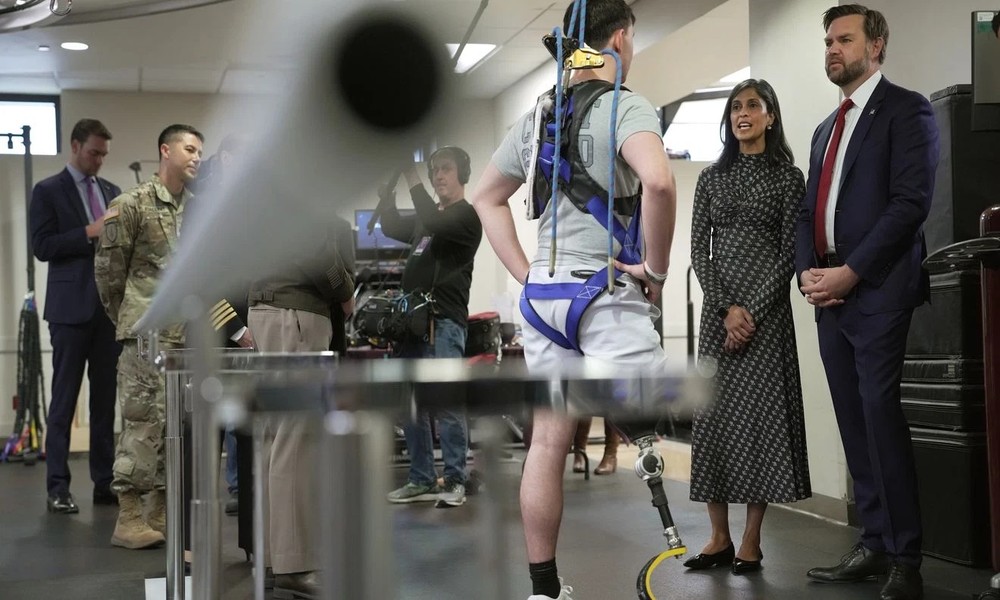

Walter Reed National Military Medical Center in Bethesda is one of the premier military medical facilities in the country, employing thousands of civilian nurses, physicians, pharmacists, technicians, administrators, and support staff alongside the uniformed military personnel who make up a significant portion of its workforce. At Walter Reed and at other military medical installations across Maryland – including the National Naval Medical Center’s footprint, Kimbrough Ambulatory Care Center at Fort Meade, and other Defense Health Agency facilities – civilian employees work within an institutional culture shaped by military hierarchy, uniformed chain of command, and operational priorities that don’t always translate naturally to the civilian employment rights framework those employees carry with them regardless of where they work. For any Maryland federal employee attorney assessing a dispute that arose in one of these environments, the institutional setting is not just background – it directly shapes how discrimination and retaliation manifest, how complaints are received internally, and what practical obstacles civilian employees face when they try to protect their rights.
Who Civilian Employees at Military Medical Facilities Actually Are
The civilian workforce at Walter Reed and DHA-operated facilities in Maryland includes GS-level employees in a wide range of occupational series – nursing, medicine, pharmacy, laboratory technology, health administration, information technology, finance, human resources, and a range of support functions. Most are competitive service employees under Title 5 with full MSPB appeal rights and federal EEO protections. Some are in excepted service positions under various appointment authorities. A smaller subset are hybrid civilian-contractor arrangements that require threshold analysis before any employment rights claim is assessed.
This civilian workforce exists within an organizational framework where the facility commander is typically a uniformed military officer and where the culture, norms, and decision-making patterns of the institution are shaped by military organizational values – hierarchy, mission focus, deference to rank, and an expectation of unit cohesion that can create significant informal pressure on employees who raise concerns through formal channels.
The civilian employees at these facilities have the same legal rights as civilian employees anywhere else in the federal government. What is different is the environment in which those rights must be exercised.
The DHA EEO Structure and What It Means for Filing
The Defense Health Agency – which operates Walter Reed and the broader military medical treatment facility network – administers its EEO program through DHA’s own EEO office, which is separate from the EEO programs of the military services that also maintain a presence at multi-service medical facilities. For a civilian employee at Walter Reed, identifying the correct EEO office is not always as straightforward as it is at a single-component civilian agency, because the facility involves DHA administrative authority, Army and Navy and other service components, and in some cases TRICARE contract structures that affect who employs whom.
The 45-day counseling contact deadline runs the same way at Walter Reed as anywhere else. A civilian employee who experiences a discriminatory or retaliatory act must initiate contact with the appropriate EEO Counselor within 45 calendar days of that act. Getting the right EEO office – DHA’s designated counselors rather than the Army or Navy EEO programs, or vice versa depending on which component actually employs the complainant – is a threshold step that affects whether the complaint proceeds correctly.
DHA’s EEO office processes formal complaints through the standard 29 C.F.R. Part 1614 framework, and the EEOC administrative hearing and appeal process applies in the same way as at civilian agencies. The institutional uniqueness of a military medical facility doesn’t change the procedural requirements – it changes the context in which those requirements are met and the institutional dynamics that shape what evidence exists and how the investigation proceeds.
The Military Chain of Command and Civilian Employee Retaliation
The most distinctive aspect of civilian employment at military medical facilities is the degree to which the uniformed chain of command has direct and indirect influence over civilian employees’ working conditions, assignments, and career trajectories – despite civilians technically being outside that chain of command.
A civilian nurse or health administrator at Walter Reed whose immediate work environment is structured around a uniformed officer’s authority over the unit operates in conditions where the normal separation between military command and civilian employment is practically blurred. A complaint against a uniformed supervisor, or a report of misconduct that implicates a military officer, creates dynamics that civilian employment disputes at purely civilian agencies don’t involve. The responding official in an EEO complaint may be a civilian administrator in the human resources structure, but the workplace environment being described in the complaint is one where military authority and civilian employment intersect in ways that affect what witnesses will say, how evidence is preserved, and what informal consequences follow complaint activity.
Retaliation in this environment can be particularly insidious because its mechanisms often operate through the military organizational culture rather than through formal civilian personnel actions. A civilian employee who files an EEO complaint may find that they are excluded from briefings, that their access to clinical cases they previously managed has been reallocated without explanation, that their schedule has been changed in ways that affect working conditions, or that the uniformed officers around them treat them differently – all of which creates a hostile environment that is difficult to document precisely because it operates through informal cultural dynamics rather than formal personnel decisions.
Building a retaliation case in this environment requires the same contemporaneous documentation discipline that all retaliation cases require, but with particular attention to the informal mechanisms through which retaliation operates in hierarchical environments.
MSPB Appeals at Military Medical Facilities
Career GS-level civilian employees at Walter Reed and other DHA facilities have full MSPB appeal rights for covered adverse actions – removals, suspensions of more than 14 days, demotions, and reductions in pay. The 30-day appeal window from the effective date of the action applies. The agency must prove its charges by a preponderance of the evidence under Chapter 75, and the Douglas factors analysis of penalty proportionality applies.
What distinguishes MSPB cases arising from military medical facilities is that the evidence and witnesses are often embedded in a uniformed organizational environment. Agency representatives in MSPB proceedings for DHA facilities often include military legal counsel from the Judge Advocate General corps or civilian attorneys in the DHA legal office. Witnesses may include uniformed personnel who are no longer stationed at the facility by the time of a hearing. Documentary evidence may be maintained in military administrative systems that are less accessible through standard discovery channels than civilian agency records systems.
None of these obstacles are insurmountable, but they are practical realities of litigating MSPB appeals arising from military environments that practitioners who handle only civilian agency cases may not anticipate. The discovery phase of an MSPB appeal from a Walter Reed civilian requires familiarity with how DHA and military administrative records are organized and how to obtain them through the appropriate channels.
Security Clearances and Clinical Privileging as Dual Vulnerabilities
Many civilian clinical employees at Walter Reed – particularly physicians, nurse practitioners, and other licensed healthcare providers – hold both a federal security clearance and clinical privileges granted by the facility’s credentials committee. This dual structure creates a specific vulnerability for civilian healthcare providers facing adverse employment action.
An agency that wants to remove a civilian clinician can pursue either the security clearance revocation pathway (with its Egan-limited MSPB review), the clinical privilege restriction or revocation pathway (through the credentials committee process), or a standard Title 5 adverse action. A motivated agency can use the credentialing process to restrict a provider’s clinical scope in ways that effectively remove their ability to perform their primary duties, creating conditions for a performance-based adverse action – all without triggering the full adverse action procedural protections that a proposed removal would require.
For civilian healthcare providers at Walter Reed and other military medical facilities, an adverse credentialing action is not simply a professional concern. It is a personnel action with career-ending implications that can be used strategically by agency management and that requires immediate legal analysis of whether the credentialing process was applied in a manner consistent with applicable regulations and whether it reflects discriminatory or retaliatory motivation.
Consulting a Maryland Federal Employee Attorney About Military Medical Facility Disputes
The combination of DHA’s organizational structure, the military chain of command culture, the dual clearance and credentialing vulnerabilities for clinical staff, and the specific institutional dynamics of complaint activity in a uniformed environment makes civilian employment disputes at Walter Reed and Maryland military medical facilities a specialized area of federal employment law practice.
The Mundaca Law Firm represents federal employees throughout Maryland, including civilian staff at DHA facilities and military medical installations, in EEO complaints, MSPB appeals, credentialing-related adverse actions, and retaliation matters. If you are a civilian employee at Walter Reed or another Maryland military medical facility and are dealing with discrimination, adverse employment action, or retaliation for complaint activity, contact the firm to schedule a consultation and get an assessment of the specific framework that governs your situation.